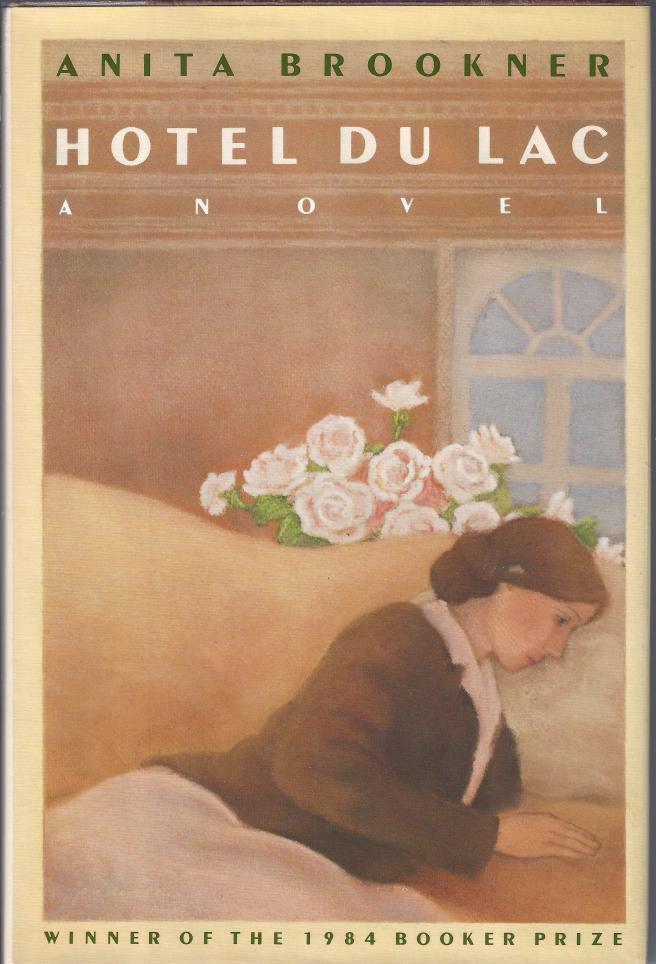
Guest Review: Hotel du Lac

[This review of Hotel du Lac was originally posted at Desperate Reader.]

Hotel Du Lac‘ is the latest read from a postal book group I belong to (it’s a brilliant idea – not mine – there are 15 of us in the current round, you send a book out along with a notebook, and get it back a couple of years later with everybody’s comments attached, it’a a remarkably pressure free set up and I’ve discovered some great books this way) it’s also the first Anita Brookner I’ve tried.

Reading through the comments that others left in the notebook has in this instance proved an exceptionally helpful way of clarifying my own thoughts on the book – curiously, because this is by no means common, most of us seem to have had similar reactions to it. ‘Hotel Du Lac‘ won the booker in 1984, but in many ways it feels like a much earlier sort of book. The central character, Edith, works for a living – but as a lady novelist writing harmless romances which feels very 1930’s. Her need to escape a scandal she’s caused, and the method she chooses to escape is positively Edwardian – discreet retirement to a Swiss hotel to see out the end of the season. Did people really behave like this in the 1980’s? Especially people living in mildly intellectual and literary circles in London – it seems somehow unlikely.

Edith, who has a certain measure of success as a novelist hankers after the comfort and companionship of married life, unfortunately she has chosen a married lover instead – one who obviously won’t leave his wife. Along comes another man who seems to think she’ll fill his mothers shoes, in this case the allure of marriage is all in the status it will confer; instead of being a troubling single woman Edith will be safely married off and far more welcome at dinner parties. She changes her mind at the last possible moment – hence the exile, and whilst in Switzerland she meets another wealthy, presentable, man who puts forward a case for marriage in even starker terms – it’s all about position, and a woman without a husband apparently has a very precarious one.

Edith’s ability to attract men, despite her habit for long cardigans, and albeit men with some fairly serious shortcomings gives the book the feel of a standard romance – dowdy woman gets the men over her glossier, blonder, sisters because they see through to her innate qualities beneath – but Edith is both too passive and too well off for this reader to care much about.

I know people rate Anita Brookner’s books – I’m inclined to think with this one that it’s reached a difficult age where to many things about it feel awkward and contrived. Despite that feeling the writing is often beautiful, and occasionally strikes a real chord, as when Edith feels she may have had enough of having to earn her own living; that writing is no longer a creative pursuit, but is instead likely to become a never ending chore that must be done to make ends meet. 

Anita Brookner Pulls Me into the 21st Century

It has been too long since I looked at Peta Mayer’s Anita Brookner blog.  I popped over there this weekend and discovered that Anita Brookner published a novella with Penguin in 2011, but it is only available in electronic format. I hate e-readers. Is Anita Brookner going to be the one to finally get me to read something on an e-reader. The answer is “hell yeah”. But, that is where it will end.

Peta notes that Brookner has never written a novella before. I think that some would argue that many of her novels, being around the 200 page mark, qualify as novellas.

A new Brookner. How cool.

Review: Hotel du Lac

[Just finished the 4th of AB’s 24 novels as I re-read them all in chronological order. This review originally appeared in honor of the first anniversary of International Anita Brookner Day on July 16, 2011.]

…it is my contention that Aesop was writing for the tortoise market…Hares have no time to read. They are too busy winning the game.

There is no denying that Anita Brookner found her fach and stuck to it. On my first read through all of her 24 novels, I often noted that I had a hard time telling one novel from another. But for some reason over the 14 years that it took me to read all of her novels, it always stuck in my head that the Booker Prize-winning Hotel du Lac was one of my least favorite Brookners. Having now re-read it, I am at a loss to understand why I felt that way. Granted, plenty of you haven’t liked it, but I think that may have had more to do with a general dislike for Brookner rather than anything specific to Hotel du Lac. Although I class myself as a rabid Brookner fan, something intensifying as I re-read her catalogue, I can understand why she is not everyone’s cup of tea.
But for those of us who do like her…

Brookner sets Hotel du Lac is in an unnamed Swiss town along Lac Leman/Lake Geneva in the waning days of the fall shoulder season as the town and the hotel look to close up for the winter. Edith Hope is a romance novelist who has done something scandalous that forces her to escape London until the furor dies down. Being a woman of means, one has to wonder why Edith installs herself in a rather lackluster, grey location with “unemphatic” scenery and poor weather, instead of travelling to some other more pleasant, dynamic location. Perhaps it is because a more interesting destination wouldn’t have provided the proper penance and reflection her acquaintances in England felt she needed. And frankly it also wouldn’t have suited a Brookner character very well. They tend to thrive, if it can be called that, on quiet and gray. True, Edith isn’t a typical Brookner character in some respects. Indeed she takes several decisions, including the one that caused the scandal and the one that ends the book, that belie the usual inertia of a Brookner heroine. Still, in Hotel du Lac we have plenty of compulsive walking: “…she carried on [walking] until she thought it time to be allowed to stop.”

In many ways Hotel du Lac is a treatise on the roles of women in society—at least as Brookner saw them in the early 1980s. It may not cleave to the tenets of traditional feminism, but it most definitely can be read as a gentle, quietly satirical screed against those social conventions that keep women playing to type and being defined solely by their relationships with men. We’ve all met Mrs. Pusey:

On those rare occasions when Mrs. Pusey was sitting alone, Edith had observed her in all sorts of attention-catching ploys, creating a small locus of busyness that inevitably invited someone to come to her aid.

Then there is Mrs. Pusey’s daughter Jennifer, outfitted like a queen (pink harem pants and an off the shoulder blouse—oh the 1980s) who serves as a kind of lady-in-waiting to her mother, while they both wait for the day when a suitable gentleman—someone interested in being the third in their mother/daughter sandwich—comes along to marry Jennifer. And then there is Monica, an eating-disordered woman about to be abandoned by a husband desirious of an heir that she is unable to produce. And Edith’s friend Penelope back in London who insists that a man is needed to legitimize Edith’s existence. Even Edith’s romance novel readers, the tortoises, all waiting for the world to turn upside down and reward the slow and the meek.

Many times I reduce Brookner’s characters to caricatures of people who find it impossible to do anything about their lives. I don’t think Edith is that same kind of character. But I do think that the decision she makes at the end of the book–the right decision no doubt–may put her on a trajectory to be one of those people. I think that few of us are truly victims of circumstance. Instead we are victims of our own decisions. As I approached 40 I made some decisions that I thought would keep me from a certain kind of professional future. Now, five years later, I realize that despite having a bit of an enjoyable whirl and liking what I do at the moment, I am back on the professional trajectory that I thought I left for good at 38. The difference is my place on the trajectory is much less secure than it was back then. I could blame it on the bad economy and the short sidedness of the Tea Party, but in the end I made the decisions that led me to this place. I think Edith is rightly changing her trajectory, but I wouldn’t be surprised if she ended up where she started.

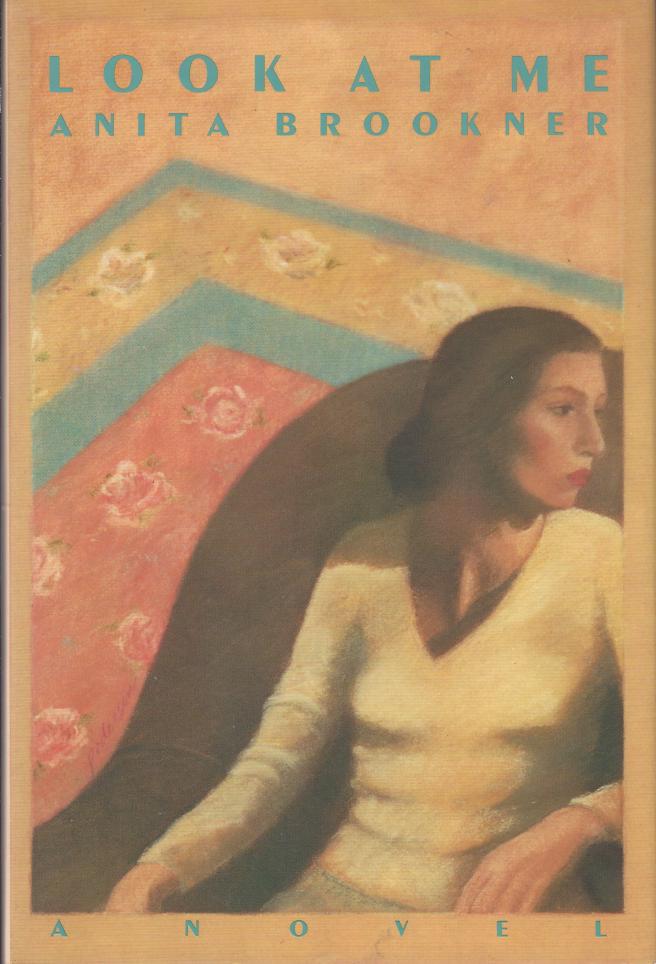
Review: Look at Me

[Number three in my chronological re-read of all of Brookner’s 24 novels.]

I haven’t read any Anita Brookner since last year’s rather successful International Anita Brookner Day. Having finished all of Brookner’s 24 novels, my intention is to re-read all of them in chronological order. Last year for IABD, I knocked off her first two novels The Debut (A Start in Life) and Providence. As much as I have liked all of Brookner’s novels on the first go, I found last year when I re-read those first two, that I liked them even more on a second read. Now with her third novel, Look at Me, I find myself of the same disposition. In fact, I think that Brookner’s novels which can seem superficially similar, have a depth that really makes them worth a second read–and frankly, I can imagine going back to them again and again for the rest of my life. This is especially comforting since, the once prolific Brookner (at one point a novel a year for about 20 years) seems to have slowed down considerably.

Frances Hinton, who hates being called Fanny, is always called Fanny. She works in a medical research library and like many other Brookner heroines, is miserably comfortable with her routine. That is until Dr. Nick Fraser and his wife Alix decide to make her a part of their social life.

If I moved in with them I would be delivered from the silence of Sundays, and all those terrible public holidays – Christmas, Easter – when I could never, ever, find an adequate means of using up all the available time.

Unlike many other Brookner heroines, Fanny comes to life as a result of this friendship and even starts seeing a doctor, James, who makes her happy.

Although I am naturally pale, I could feel the blood warm in my cheeks. I drew no conclusion from this, and my instinct was correct. I was not falling in love. Nor was there any likelihood that I might. But I was being protected, and that was something that I had not experienced for as long as I could remember. I was coming first with someone, as I had not done for some sad months past, and in my heart of hearts for longer, much longer.

Fanny’s benign desire for someone to finally pay attention to her is ultimately overtaken by Alix’s much less benign, somewhat pathological need to have everyone looking at her instead. Alix uses Fanny for her own amusement and doesn’t seem to mind the results. Fanny reflects on her relationship with Alix:

I was an audience and an admirer; I relieved some of her frustration; I shared her esteem for her own superiority; and I was loyal and well-behaved and totally uncritical. Yet she found me dull, intrinsically dull, simply because I was loyal and well-behaved and uncritical.

And it is Alix’s need to be at the center of attention that makes her more of a taker than a giver. Alix may have introduced Fanny to James, and enjoyed watching their relationship develop. But when she thinks she is being denied all the details of the results of her matchmaking, or worse, when she realizes that Fanny isn’t letting the relationship with James go where Alix thinks it should go, she begins to drive a wedge between Fanny and James. In many ways there is nothing unusual about this story, I think we have all been subjected to the cruel selfishness of so-called friends, and we have all been jilted in romantic relationships. But for Fanny the situation is life changing in a way that she struggles against. She sees her life going in a direction that seems inevitable despite her efforts to alter course.

I could have been different, I think. Once I had great confidence, great cheerfulness; I did not question my purpose or the purpose of others. All that had gone, and I had done my best to replace it. I had become diligent instead of spontaneous; I had become an observer when I saw that I was not allowed to participate. I had refused to be pitiable. I had never once said, Look at me. Now, it seemed I must make one more effort, one more attempt to prove myself viable. And if I succeeded, I might be granted one more opportunity to do it all over again. I did not dare to think what would happen if I failed.

Does she fail? If you have ever read Brookner, you probably know the answer to that.

Guest Review: Strangers

[This review of Strangers was originally posted by Ti at Book Chatter.]

The Short of It
Amusing, sharp and unusually accommodating… these characters give meaning to the term, “growing old gracefully.”

The Rest of It
Paul Sturgis is a 70-something bachelor living in a quiet, London flat. Never married, and having only one living relative, a distant cousin named Helena, Paul finds himself wandering about looking for something but he’s not sure what. To avoid the dreaded Christmas invitation from Helena, he decides to take holiday in Venice.
In Venice, he meets Vicky Gardner. Vicky is an interesting sort. She is pretty,  recently divorced and essentially homeless since she has no permanent place to call home. She flits from place to place, seemingly happy in her travels. Paul, unusually reserved gives his number to Vicky and then immediately regrets it. How lonely does one have to be to finally realize that at the age of 72, being with someone might be better than being alone?

This was my first Brookner and I enjoyed it immensely. These characters are proper, polite and exceedingly friendly, but utterly lonely. They are “strangers” in that they have no idea how to co-exist with one another. Innocent conversations turn into something else and then before you know it, in walks awkwardness. It’s all incredibly entertaining but in a quiet, understated way.

I understand that Strangers is Brookner’s 23rd novel. I can’t believe it took me this long to read one of her books but now I want to read them all. It’s not as if there was a lot going on in this one, or that it was even a page-turner, but it’s the type of writing that I enjoy. When I writer can take every day things and make them interesting, then he/she has my attention.

Talking Posh at the Reunion

[This musing on the recorded voice of Anita Brookner was written by blogger A Super Dilettante.]

I must admit that the best highlight of my weekend was hearing Anita Brookner’s voice for the first time on the wireless. I know there are a few people who read this blog know that I adore Anita Brookner’s novels. And also we know that she rarely gives interviews so one shouldn’t be surprised that one’s never heard of Anita’s voice.

It was an unexpected pleasure to listen to the BBC Radio 4 programme, The Reunion (the radio programme which reunites a group of people intimately involved in a moment of modern history).

In this edition, the radio presenter, Sue MacGregor reunites five past pupils of London’s Courtauld Institute of Art, which pioneered the teaching of art history, has produced countless stars of the art and museum world. Click here to listen to the programme.
Anita Brookner taught Art History at the Courtauld for many years. One of her students (the artist, John McLean) later wrote about Anita as follows, “She gave very elegant lectures. I had never seen anyone so metropolitan and poised”.

Dr Sarah Symmons, a former student, who is now a lecturer at the Department of Art History and Theory at the University of Essex, remembers, “‘She had a small office at the top of the building and we went in and there was a lovely smell of scent – she always wore a very nice scent. She had the window open and she was spreading seed for the pigeons on the windowsill; she said that she wanted to stop them cooing while she gave the seminar. This was so disarming and pleasant, so different from what all the other staff at the Courtauld were like… [She] was an elegant, stylish figure, always beautifully dressed. In tutorials she would produce a pack of cigarettes. They were non-tipped ones, quite low-grade – I was very impressed’.

I love the bit about the Courtauld in the programme, it was described as a place where smart young ladies used to go to read art history in between their flower arranging course and then, in the afternoon, they would have tea and home made scones provided by the Courtauld tea lady, Mrs Winkle. It sounded all very civilised and a vanished world to me.

The voice of Anita Brookner – it is unmistakably “plummy” (in a very Oxbridge educated voice from a bygone era). It reminded me of elegant ladies who go to lunchtime concerts at Wigmore Hall wearing their best fur coats and floating the luxuriant scent of Vol de Nuit perfume as they enter into the room. The writer, Julian Barnes summed up the way Anita Brookner speaks perfectly when he said, ‘One of the most remarkable things about her is that her conversation has perfect punctuation, so that you hear every colon and semi-colon; and this makes you aware that your own grammar in spoken English is very sloppy. It’s not a deliberate trick to make you feel uneasy; it’s simply how she is.’

Her voice is distinctive and gloriously deep (though not as deep as for instance, the voice of the journalist, Katharine Whitehorn. In those days, the ladies were taught to speak in a deeper voice. Reference book on how to speak eloquently: The Magic Key to Charm by Eileen Ascroft, introduction by Joanna Lumley] but it’s incredibly charming upper class drawl. It is not affected in the way the Sloane Rangers speak. She speaks charmingly with open vowels very clearly. I think Anita’s voice is a kind of voice that became enriched by years of living in France drinking the most elegant French wine and talking about Delacroix, Goya, Manet and Courbet.

There were other beautiful art historian voices in the programme too. I found the director of British Museum, Neil McGregor’s radio voice is incredibly appealing, mellow and addictive to listen to in contrast with a high-mannerist, theatrical, canary squeak of the art critic, Brian Sewell. The radio presenter, John Humphrys once remarked, “Brian Sewell, the only man I have ever met who makes the Queen sound common.” His voice reminded me of one of my old art history professors at the university who talked just like him. During his first lecture, he said in his cut glass accent, “First slide, please” to one of my classmates. He sounded so posh that I couldn’t stop laughing and I almost fell off from my chair. On the other hand, the voice of the founder of the Art Newspaper, Anna Somers Cocks is utterly cultivated. It has got the eloquent and clipped tone – it’s such a clear diction and every word is very pronounced and very well spoken.

Near the end of the programme, Sue MacGregor asked Anita Brookner what the Courtauld Institute of Art gave her as a lecturer. She replied without a hesitation, “A whole life”. I thought it was such a profound statement. It reveals that she had so much pride in what she did. It gave her life meaning and a sense of purpose. She even went on to claim that her success as a writer was less interesting than her life at the Courtauld. After listening to this programme, I thought how all these voices and their precise diction echoed the airwaves. They were so interesting, so sophisticated and so individual. Compared to their voices, how bland it is to listen to some of our politicians’ voices. The guests in The Reunion programme have unapologetically highbrow, serious, educated, RP (Received Pronunciation) voices which we rarely heard these days. Such voices are not heard very often – not even on the BBC radio and the news programme on television. The presenters have toned down their voices. We have dropped our “t” in the same manner as we drop our trousers down below our waists. The days of Alan Keith (the late presenter of BC Radio 2’s programme, Your Hundred Best Tunes) were long gone. In fact, a good standard spoken English is becoming a rarity in places like London and Manchester.

Jonathan Cecil was right when he once wrote, “Good speech is a matter of clarity and the unselfconscious enjoyment of the spoken language“.

Reference:
A singular woman, Mick Brown interview with the novelist Anita Brookner. The Telegraph newspaper, 19 Feb 2009

Guest Review: Making Things Better

[The following review of Making Things Better/The Next Big Thing was written by C.B. James. ]  

I started reading Making Things Better (The Next Big Thing in the UK) on International Anita Brookner Day. I would never have considered it if Thomas hadn’t come up with the event.  I can’t say why really. Anita Brookner just never came up on my radar before IABD.

Brookner published her first novel at the age of 53 and has published one almost every year since, 24 altogether.  There were three on the shelf at my local library. I’ll be honest, I picked Making Things Better because it was the shortest of the three. I can’t help but wonder if this was a good place to start.

Virginia Woolf admitted that she wrote lesser books in between her more serious work.  If you randomly pick up her book Flush, a biography of Elizabeth Barrett Browning’s dog, for the very first Virginia Woolf book you ever read, you will enjoy the book, but you won’t think very much of Virginia Woolf as a writer. Flush is good, but it’s not great. From reading Flush, you’d have no idea that Virginia Woolf was capable of a book like Mrs. Dalloway.

Maybe this happened to me with Making Things Better.

Apparently, several people who joined International Anita Brookner Day admired her writing but had issues with the overall passivity of the characters. I’m afraid I had the opposite reaction, at first. The characters passivity did not bother me–there are undoubtedly passive people in the world.  Making Things Better is about Herz, an Englishman who has spent his life in the service of others, doing his duty to his family and his employer. He missed out on his one chance with the love of his life, later married someone else and then lost her, too, both due to his family’s circumstances. If he’d left home, things would have gone better for him but he could not abandon his family.

Forced into retirement, he spends the length of the novel observing his own life along with the life of his beautiful, much younger downstairs neighbor until he receives a letter from his first love. This letter sparks him to take action in ways he never has before, to make an attempt to find solace in her company during their final years.

This all sounds like a perfectly good novel, familiar to lots of readers certainly.  Similar to Iris Murdoch’s The Sea, The Sea and Andrew Holleran’s The Beauty of Men, both of which I loved.  So how can I explain my problem with the novel? Start with this section. Herz is talking to his ex-wife Josie whom he meets for dinner monthly.

“What is it, Josie?” he asked quietly.
She smiled sadly. “It never goes away, does it?”
“I’m sorry.”
“That longing to be with another person.”
“Not with me, I take it.”
“No, no, not with you.  Not even with Tom.  There’s a man who comes into the office. We have a drink from time to time.  Married of course.   Yet we get on so well…” She broke off.  “You don’t want to hear this.”
“Why not stand your ground? See what comes of it?”
“Look at me, Julius.  I’m old.  I might as well accept it.  What surprises me is that I could still feel hope, look forward to seeing him, perhaps no more than that.  I couldn’t undress for any man now.  As I say, I accept it.  Mother’s illness may have been the jolt I needed. Once the decision was made I realized that it had saved me from a lot of uncertainty.  Humiliation, perhaps.  I still have my dignity.”
“I admire you for it.  I know how unwelcome one’s dignity can be.”
“So you think I’m right?”
“Probably.  I also know what you mean. Keeping one’s dignity is a lonely business.  And how one longs to let it go.”  This was perhaps unwise.  “When shall I see you again?’

Have two people ever had a more bloodless conversation about longing?  Does this strike you as over-written?  Do people really say things like “I know how unwelcome one’s dignity can be?” These two sound like characters in a novel, not like two people having a conversation.  (That was my initial reaction.  My feelings have changed since I finished the book.)

Keeping one’s dignity is a lonely business sums up the book. It’s certainly a decent theme for a novel, and Ms. Brookner handles it quite well. I consider longing  a form of passion which is all but absent from Making Things Better. I kept thinking about how Iris Murdoch handled very similar characters in her The Sea, The Sea, but I can’t imagine Anita Bookner ever creating a character who would kidnap a woman because he loved her. That’s fine really. We already have one Iris Murdoch; we don’t need another.

By the end of Making Things Better I was beginning to think of Anita Brookner as Carson McCuller’s English aunt. These passive people she’s writing about are the same people who populated The Heart is a Lonely Hunter. People who long for connection with another person but can’t take the action needed to gain it for some reason. But while I can find lots of passion in The Heart is a Lonely Hunter, I can’t find much in Making Things Better. Everyone is so very well mannered in Ms. Brookner’s novel, there’s no way they could ever break free of themselves. They are even more hopeless that the people in Ms. McCulller’s novel.

I also had problems with the ending. I won’t go into those here, but I felt it was a bit of a cheat, and I saw it coming several chapters early. Honestly, it felt a little high school, to me.

So will I read more books by Anita Brookner? I think I will. In spite of the problems I had with Making Things Better the characters and their story has stayed with me for over a week now. Herz is haunting me. I consider that high praise. While I did find the character’s passivity frustrating, I cared enough about them to want better lives for them. And while I had problems with Ms. Brookner’s writing the first time I read it, it’s clear to me that she is the talented stylist Simon and Thomas both said she was.  

Looking at the passage quoted above now, I think it’s darn good really. While it may be mannered to the point of unreality, it gets to an essential truth about human nature in an precise, eloquent manner. I find I’m liking it more and more over time.

Guest Review: Hotel du Lac

[The following review of Hotel du Lac was written by Mel at The Reading Life.]

My first Anita Brookner was A Start in Life/The Debut. The second was Leaving Home. I totally loved and think I understood the first line of A Start in Life “Dr Weiss, at forty, knew that her life had been ruined by literature”.

I liked both of these novels. The people in her novels all seem to lead very careful well ordered lives. It is a world where one spends hours wondering if it would be a better idea to wear a light or a dark camel colored coat to tonight’s lecture at the British Museum on 14th century Baltic ceramics. The novels of Brookner are Northern cold climate books, not works of the Tropics.

The Hotel du Lac won the 1984 Brookner Prize. The story line is pretty straight forward. It centers on Edith Hope, a well known writer of romance novels who has been sent to a hotel in Switzerland to recover from a scandal about her own personal life.

I must say that what I liked best about Hotel du Lac, I really loved it, was the lengthy description of Hotel du Lac itself. It seems like a wonderful place to be a regular guest. The staff and the other guests were just marvelously done.

I did a bit of a study of the first two or three pages of the novel. I think we can learn a lot from some of Brookner’s word choice. The word “grey” appears three times in the first paragraph. A character is described as “tight lipped”, “older” and “apologetic”. A personality is referred to as “dim” and “low”. The room of the hotel is done in colors of over cooked veal. The bulbs are weak and twinkle drearily. There are 100s of these expressions throughout the novel. Brookner, is painting a picture for us. Brookner was an art historian before she became (at age 53) a novelist. The use of all these colors is very much part of the tone of the book. I can see why some find her work almost oppressive.

There is a kind of a surprise ending at the close of Hotel du Lac. I will not give it away other but I really liked it and was a bit shocked I admit.

I enjoyed this book. It is a work of very subtle intelligence. The descriptions of the hotel are really wonderfully done. The people we meet in the hotel are interesting and it is fun to get to know them.

Guest Review: Hotel du Lac

[The following review of Hotel du Lac was written by Amanda at Wild Frantic Bird.]

Although I missed Anita Brookner day, I still wanted to post my thoughts on Hotel du Lac. This is my first Brookner book. I’ve always intended to read something by Brookner, but I think I was daunted by the number of books. I didn’t know where to start. I picked Hotel du Lac because it was a Booker winner.

Hotel du Lac is what I would call a quiet novel. There is a plot, but the strength of the book lies in the characters’ unspoken thoughts, observations, and motivations. The novel begins with Edith Hope — a famed romance novelist — settling in to a Swiss hotel after a socially embarrassing incident. The hotel is sparsely peopled, but the handful of hotel residents fuel the humor, emotion, and, of course, move along the plot.

This slim volume — under 200 pages — clips along at a nice pace,the wit is sharp, and the characters are intriguing…. but…… I wouldn’t say I like it. I think I certainly like Brookner’s writing. She seems to be a sort of darker Barbara Pym with bits of Elizabeth Taylor cooked in and a dash of Iris Murdoch; you know, quintessentially British and witty, but with darker emotions and an elegiac tone. Of course, I’m basing my assessment of Brookner’s writing style from one book and I should really read all of them before I start making author-recipes. I simply didn’t care for any of the characters; Edith Hope seems cold and I have a difficult time sympathizing her situation and all the other characters are obnoxious, shallow, and/or calculating.

For all my character dislikes, I simply cannot stop raving over the writing. In addition to great dialogue and some marvelous descriptive passages, I found myself really loving the phrases that seemed to pop-out. For example, the hotel corridor is described as being “vibrant with absence” (pg.13). I remember pausing my reading to mull over that phrase. It is such an apt description of that sensation that strikes out with emptiness when one is in a typically bustling place. I can certainly say that the academic library I work at is vibrant with absence in the summer months!

So yes, certainly more Brookner in my future.

Guest Review: The Next Big Thing

[The following review of The Next Big Thing/Making Things Better is from Alex at Luvvie’s Musings.]

(Photo Credit: Mike’s Travel Guide)

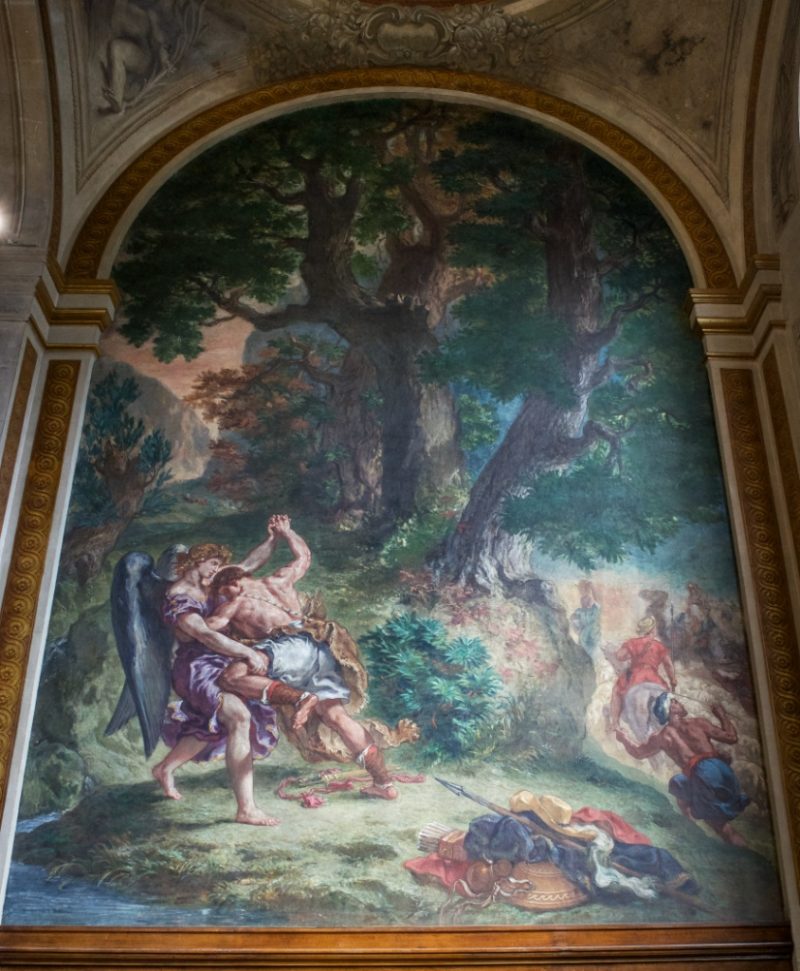
Isn’t this rather beautiful? This painting features in Making Things Better aka The Next Big Thing.

It was longlisted for the Booker Prize in 2002.

I was a bit excited about reading it as this is the first Anita Brookner I’ve read that features a male in the lead role, so to speak.

Julius Herz is retired and reflecting on his life to date. It could be argued that he is in his dotage. He is ailing physically and mourning the lack of someone to look after him in his old age.

Julius did marry once – to a cheerful, practical sort of woman – Josie – but cramped living conditions, which included his demanding and morose parents, spelled the death-knell for any hope of proper intimacy.

Brookner’s novels may be slim but they’re never an easy read. She seems to delight in tackling the difficult subjects like old age and loneliness that other writers might choose to give a wide berth.

Not our Ms Brookner. She plunges in where angels fear to tread and paints a sobering picture of something that most of us will face – decline and decay – and possibly regret. As my father regularly intones in lines attributed to Bette Davis I think – “Old age isn’t for sissies.”

Like many of Brookner’s characters, Julius was an obedient offspring. Not necessarily the favoured son by any stretch of the imagination…but the one that tidied up and tried to make things better. When his brother Freddy, a promising concert violinist starts to lose the plot, Julius is the only one who visits him in the Sanitorium and witnesses his decline.

Late in life, Julius is given a chance at freedom. His parents having passed on, a distant acquaintance, who helped the family re-settle in London from war-torn Europe, bequeaths a significant proportion of his estate to Julius which frees him from the necessity to work or worry about a roof over his head.

But is it too late? “He was not trained for freedom, that was the problem, had not been brought up for it.” Poor Julius feels so overcome with the challenge of freedom he suffers “a feeling of unreality, so enveloping as to constitute a genuine malaise.” A quite amusing dialogue ensues during an appointment with his doctor where Julius earnestly asks if he could be suffering a similar experience to Freud’s on the Acropolis. The Doctor ignores the question of existentialism and pursues a comfortable line of enquiry – blood pressure.

Friends and acquaintances suggest that what Julius needs is a holiday. In his obliging manner, he attempts to re-visit the joys of his youth, when he sampled the delights of brief getaways in Paris with obliging young women. It doesn’t take long to get to Paris from Waterloo…but the people have changed and of course Julius has too. He feels his age and decides to return home earlier than planned. Before he leaves, he pops into Saint Sulpice to check out Delacroix’s painting. I’ll leave you to read the book and find out the epiphany or new reading that Julius takes away with him from the viewing.

I always feel a wee bit more edu-muckated after I’ve read Brookner. I learn new words – this book brought me meretricious, which I always forget means “befitting a harlot – or showily attractive” – a most useful word – must use it more often. Then of course there is fiacre – which you might think is something to do with a fiasco – but no, it is a French four-wheeled cab – never enough cabs I say. Finally inanition.- emptiness esp of nourishment i.e. how I felt earlier this week after a particularly nasty tummy bug.

In conclusion I have to say that on the whole I found The Next Big Thing a bit of struggle – rather like Jacob wrestling with the Angel. There is a very telling line early on when Julius forms a friendship with a younger man – a co-beneficiary of the estate bequeathed to them. They dine together on a regular basis “Herz had little experience of dealing with younger people but understood instinctively that one kept out of their lives as much as possible but was curious and indulgent towards them….It was a matter of discretion not to talk about oneself. To do so would be to shock Simmonds with the prospect of what awaited him.”

I guess I’m not shocked. More gloomily depressed. One doesn’t want to shoot the messenger of course, but it has to be said that Brookner fare puts you off old age, so she does.