Review: Visitors

[I’m up to number 17 in my chronological re-read of all of Anita Brookner’s 24 novels.]
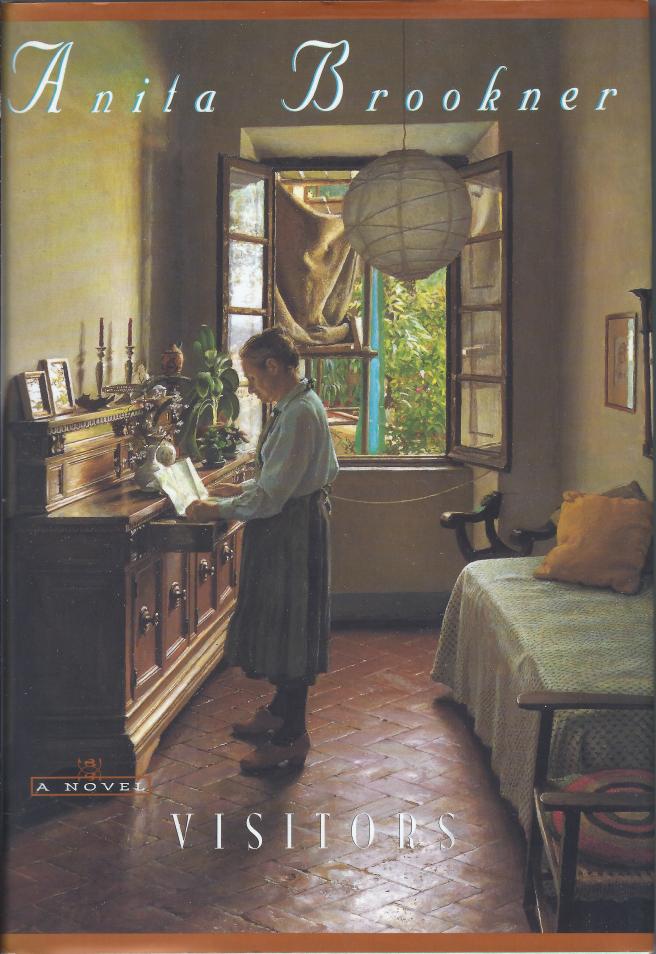
There is something telling about the fact that the main character in Visitors, Dorothea May, is called Mrs. May by the narrator. The other characters don’t have titles and they don’t call her Mrs. May, but Brookner is clearly making a point. Mrs. May is a widow and her social sphere mainly revolves around her husband’s cousins Kitty and Molly and their husbands. Indeed her place in the world seems to be entirely entangled in theirs. She doesn’t necessarily want to be drawn into their world and perhaps keeps up the relationships more out of a sense of duty than any real positive desire. She has one friend from her single days, but she lives out of London and I don’t think the two ever see each other over the course of the story. Even Mrs. May’s solicitor and doctor  are leftovers from her husband.

Strangers, introduced to her for the first time, assumed that she had never married, thinking her self-sufficiency no more than the sum of others’ indifference. That was their business; hers was to give no sign of anything out of order. This she succeeded in doing. Unbeknown to herself, she was considered slightly forbidding. She had few friends now, but that, she thought, spared her the pain of losing them.

Into this world drops Ann, Kitty’s granddaughter from America, who shows up with her monk-like fiancé and their (not outwardly) gay friend Steve. Ann stays with Kitty and her husband Austin while Kitty tries to pull out all of the stops to keep Ann’s wedding from becoming a makeshift affair. Ann’s macrobiotic fiancé David ends up staying with Molly and her husband Harold, the latter of which becomes rather enchanted by David’s over-earnest, rather un-English variety of Christian belief. And their friend Steve ends up staying on the other side of London with Mrs. May, whose life may be empty but not so empty that she wants a visitor around. In fact from the start of his stay, Mrs. May makes it pretty clear that he is only welcome to stay in his room and occasionally other parts of the flat when he is explicitly invited for a meal. If this were a different kind of book, Steve would find his way into Mrs. May’s heart and it would transform the rest of her life. And certainly if Hollywood got its mitts on the film rights that is exactly what this would turn into. But this isn’t a different kind of novel and, based on the gloriously staid film version of Hotel du Lac, it seems unlikely that there is a director out there waiting to wreak havoc on Brookner’s perfect vision. At least I hope not.

There are subplots that revolve around Gerald, the estranged father and son of Ann and Kitty, as well as Ann and David’s future, and even to a certain extent, a thought or two about Steve’s prospects. But none of this seems to be the point. It’s all background to Mrs. May’s attempts to be left alone. There are glimmers here and there that suggest Mrs. May might actually be enjoying the company of her visitor, but they are short-lived, beaten out by her focus on solitude. It is only after all the action of the honeymoon is over and the three young people have gone off to France that Mrs. May starts to think that having someone around might not be such a bad thing after all. It’s when she is alone again that she realizes that as much as she disliked Steve–and why? there is never any clue as to why he was so unlikable to her–he seemed to have the effect of forcing her to live in the present. In spite of this or perhaps because of it, she did everything she could to make sure that Steve moved on after the wedding. Did she really dislike Steve or was she simply unable to deal with the possibility he represented that the solitude she thought she cherished was not providing her with the life she wanted.

In the end it’s not all for nothing. Steve, and the young in general, may not have been the answer for Mrs. May, but he does seemed to have provided her with a revelatory moment that promises to alter the trajectory of her final years. She realizes after he is gone that something had shifted.

She knew, quite calmly, that her days were empty, as the flat, which she now entered, was empty, with an emptiness she had not quite anticipated. She had thought to enjoy her solitude, but in fact she found herself listening for another’s presence, however fleeting, however indifferent. She would have welcomed a stranger, for now she knew that this was possible.

If the novel had ended there, her future would have seemed pretty bleak. She had her chance and missed it. But in the short, final two chapters she appears to have found a way forward that would make the most of what she had. A way that has her looking at Henry’s relatives less like an obligation and more like an opportunity. Certainly doesn’t seem like like much, but it just may be enough.
Guest Review: A Start in Life

[This review of A Start in Life (The Debut) is from The Mookse and the Gripes.]

About ten years ago I read Anita Brookner’s Booker Prize-winning novel Hotel du Lac. I remember very little about it now, though I think I was rather positive. However, I didn’t feel any compulsion to read more of her work. Over the last year or so, though, I’ve seen more and more of my trusted book-reading friends proclaiming that she is among their favorites, that they cannot get enough, that if you’ve only read Hotel du Lac you really don’t know how great she is. Okay, I finally said, I’ll give her a go (it helped that Penguin UK had just released a large batch of her books in attractive new editions). I started at the beginning, her 1981 novel A Start in Life, and it is among the best debuts I have ever read. It is among the best books I’ve read. I loved it unconditionally. I have nothing bad to say about it whatsoever. I do plan on highlighting some of its strengths and delights in this post, but if you’re looking for anything other than praise for Brookner’s debut you will come up empty here.

Let’s start with the opening line:

Dr. Weiss, at forty, knew that her life had been ruined by literature.

Is there any way for readers like us to resist such an opener? It’s bold and wonderful. I’m glad to say that the book just keeps getting better from there.

Our protagonist is Ruth Weiss. The story begins when she is forty and trying to reconcile all of the unanticipated — even unwanted — occurrences that led her to where she is in life. As a child, the “moral universe” was presented in the books she loved: “For virtue would surely triumph, patience would surely be rewarded.” As a child, she couldn’t imagine it being any different, and she feels that she was blinded to some greater truth:

So eager was she to join this upward movement towards the light that she hardly noticed that her home resembled the ones she was reading about: a superficial veil of amusement over a deep well of disappointment.

Most of the novel concerns her upbringing in London and her attempt to become independent in Paris. Holding her back are her fully realized parents, George and Helen. We learn about what they wanted in life, as well, and understand how they, closer to the end than Ruth, have had to delude themselves that they’d missed the boat. George had a job he didn’t want and eventually found himself in a marriage he’d rather avoid, instead working to pass a few evening hours in a mirage of marital bliss in another woman’s home. For her part, Helen had been a stage star but finds herself bed-ridden when she is no longer considered for roles.

George and Ruth have retreated from the stresses of trying to make something work in their life. Unfortunately, they feel they can now rely heavily on their daughter, threatening to erode her life as well.

In the country of the old and sick there are environmental hazards. Cautious days. Early nights. A silent, ageing life in which the anxiety of the invalid overrides the vitality of the untouched.

Ruth is not the type of woman who will confidently take the world by storm, either. She is not particularly attractive to the men she knows, and she certainly hasn’t learned much from her parents, who don’t really understand their strange daughter. She’s of that temperament that feels disappointment keenly and still manages to say, “I’m very lucky, really.”

But Ruth does feel a desire to spread her wings, to have, well, a start, though deferred, in life.

In her blue dress, in which she had not taken Paris by storm, and her wool coat, Ruth felt shabby and obedient. The girl wore trousers and a pullover, the man a well-cut suit of tweed. A great desire for change came over Ruth and a great uncertainty as to how this might be brought about. For she knew, obscurely, that she had capacities as yet untried but that they might be for ever walled up unless her circumstances changed. Love, she supposed, might do it, but there was no one with whom she might fall in love.

A Start in Life is an intelligent exploration of lives eroding from circumstance, and the stories folks tell themselves to get by. The characters are delightful and frustrating and painfully real. I’m ready for more Brookner.

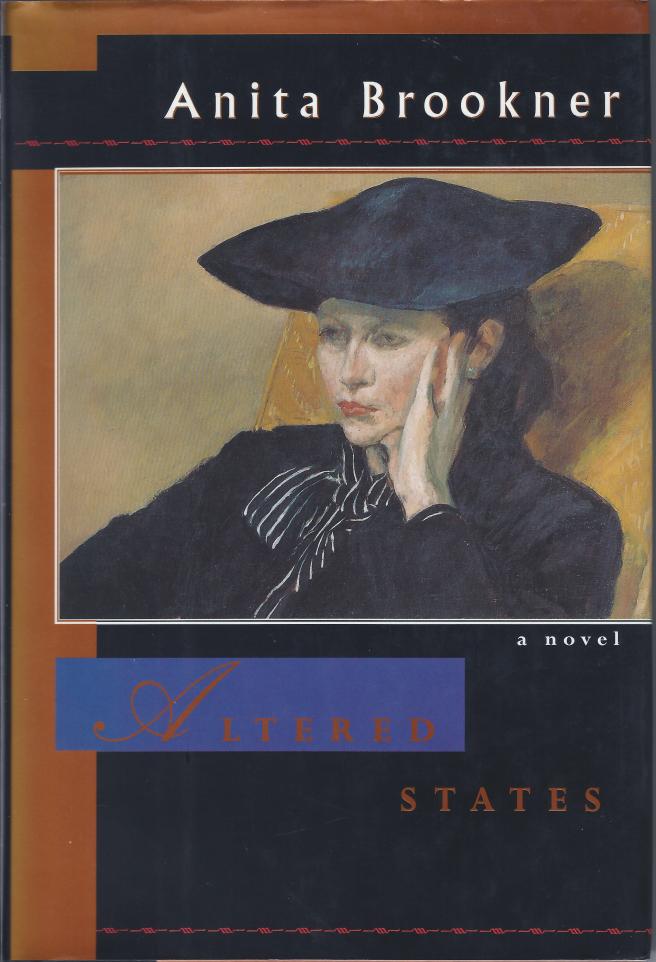
Review: Altered States

[I’m up to number 16 in my chronological re-read of all of Anita Brookner’s 24 novels.]

As I sat down to write this review this morning I found I needed to go over the second chapter pretty closely because I was getting some of the names and relationships a little bit confused. As I wrote who was who on the back of an envelope, it struck me as a bit Trollopian. I’m currently re-reading Dr. Thorne and Brookner’s relationship matrix in Altered States began to make me think of Trollope’s intricate social and familial networks. Brookner’s hero Alan’s mother Alice was the second wife of the father of her friends Sybil and Marjorie. Sybil and her husband Bertram have a daughter Sarah who is not just Alan’s obsession but also the obsession of Jenny the childless Polish wife of Sarah’s uncle (and Bertram’s brother) Humphrey.

Got that?  Of course Trollope would have littered it with a few sirs and ladies but the feeling was the same. The fact that Brookner has Alice re-reading The Claverings and quoting Lady Mason from Orley Farm kind of makes the connection feel complete.

In some ways it isn’t all that important to really remember who any of the characters are since the plot distills rather simply down to Alan’s obsession with Sarah. Even the life and untimely death (not a spoiler) of his wife Angela is secondary to the presence, and absence, of Sarah. My oversimplification is meant to summarize rather than discount the fine detail that Brookner puts into the cast of characters and how they interact with and impact each other. In fact, all the other relationships seemed much more compelling than anything Sarah was involved in. Perhaps that is because I can get a little bored with unrequited love, but as I sit now thinking of it, it seems as if the main event–Alan’s fixation on Sarah–is really secondary to the rest of his life, at least as the reader sees it. No doubt the rest of the cast is secondary in Alan’s mind, but surely, it could be no accident that those are the people and relationships that Brookner really explores. Sarah spends most of the book offstage and never makes much of an impact when she is on the scene. 

Alan’s ill-fated marriage to Angela, one of Sarah’s acquaintances, is one of those perfect Brooknerian sequences in which someone finds themselves married without really knowing how or why. Angela certainly trains her sights on Alan until he finds himself somehow engaged and then married. It’s possible he gets married to forget about Sarah, but it seems more likely that she simply wore him down. As the happy couple head off into their life together Alan seems to want to be alone.

I longed for nothing but a cup of good strong tea, preferably drunk in complete silence. Angela, I knew, would sit up half the night dispatching pieces of wedding cake, the very cake that was giving me such unaccustomed indigestion. I wondered if there were any precedent for a bridegroom wanting to spend his wedding night on his own.

The fact that this was more or less the high point of their marriage says quite a bit. But, as I alluded to, Altered States really isn’t about Alan’s marriage. There is a matrimonial tragedy that Alan has to live with the rest of his life, but stronger than any remorse or regret is an underlying sense of I wonder where Sarah is.

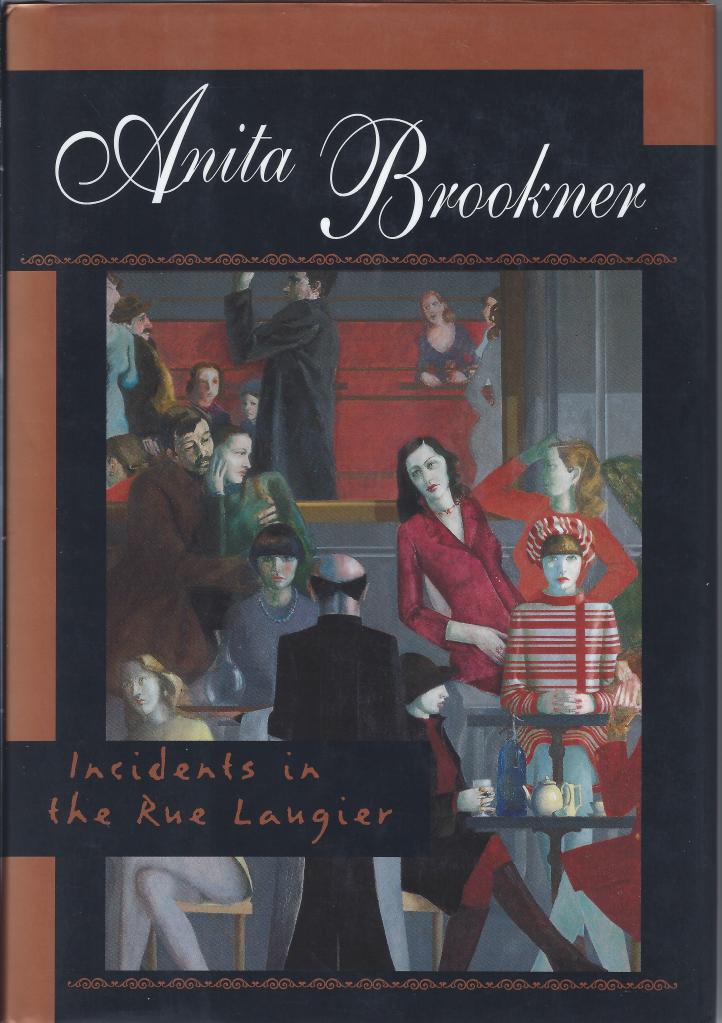
Review: Incidents in the Rue Laugier

[I’m up to number 15 in  my chronological re-read of all of Anita Brookner’s 24 novels.]

I have often mused about Anita Brookner’s personal life. Partly because she kept it largely out of the public gaze while she was alive and partly because it’s hard to read her output and not jump to conclusions about her private life and personality. This is a sloppy approach to understanding a novel for sure, and I have done it less and less as I make my way through these re-reads of her novels, finding far more depth and breadth in her characters than I did the first time through. But, I must admit, as I read Incidents in the Rue Laugier, I found myself sliding back into wondering about how dire and depressing Brookner’s life must have been to have written these characters and this story.

On the surface Maud Harrison (née Gonthier) is someone completely stuck in a reality defined by others. Her mother, her lover, her husband, and her in-laws. At no point does Maud seem to have any agency. At an early age her fate seems sealed by situations seemingly out of her control. As I silently urged her to find her feet I began to think again about how this must be a reflection of Brookner’s life. But as Maud lamented her lack of independence and freedom, it occurred to me that Anita Brookner was not one of her characters, indeed she was the antithesis of her characters. Her life, at least from the outside, was nothing but an exercise in independence and freedom. She made significant inroads in the male bastion of her academic career, she upturned her academic life at age 50 to become a prolific novelist, and, as far as the public can see, was never encumbered by romantic relationships that so often prove so stifling to her characters. 

In Incidents in the Rue Laugier, Maud’s mother Nadine is focused on finding a suitable way to get Maud married off as soon as possible. When they go to Nadine’s sister’s place for their summer holiday Maud is introduced to her cousin Xavier’s English friend Robert Tyler and to his college friend Edward Harrison who has been invited to help make up numbers for tennis. There are actually spoilers in this Brookner so I am going to skip over a few things and just say that Maud and Edward end up marrying. Neither really want it but neither seem to have the will to make anything else happen. Time and again there are suitable opportunities to call it off but both lack enough imagination to come up with any alternative plans for life. 

For the most part I have no problem speaking my mind and am often honest to a fault. But what I have realized over the years is that sometimes I work through issues in my head and forget that I haven’t shared that process or outcome with others. The result then in those circumstances is not un-Brooknerian, leading to missed opportunities, confusion, miscommunication, mistaken impressions, and even bad feelings. When discussing one of the most consequential moments of her life, Maud asks her mother why she didn’t warn her or try and save her from a bad situation. Nadine’s response? 

We were at dinner, if you remember. Nobody argues at the dinner table.

I would never let something as trivial as that keep me from an important discussion, but my own communication foibles can have the same result. For myself, whatever challenge I may create or find myself in I tend not to let them add to any sort of cumulative inevitability. One of the glories of adult life is the ability to redefine or reset your own destiny even if within broader constraints. But for Maud and Edward and most everyone else who ambles across the pages of Incidents in the Rue Laugier inertia is an unalterable functional reality.

Brookner chooses an uncharacteristically unconventional narrative approach. The novel begins and ends with Maud’s daughter Mary finding her mother’s notebook after her death. She tells us right off the bat that she is to be our unreliable narrator as she launches into Maud’s life story. What we don’t find out until the end is just how little real information that notebook offered and that what we have been reading is more or less pure fantasy on Mary’s part.

But it is also true that most lives are incomplete, that death precludes explanations…But that notebook serves as a reminder. Its lesson–that any notation, any record, is better than none–tells me that life is brief, and also that it is memorable, that the trace it leaves behind is indelible. And if the trace is inscrutable, this too may be appropriate. The dead, perhaps even more than the living, have a right to their mysteries. And who knows? We, the survivors, may be called upon to explain them, if only to ourselves.

Review: A Private View

[I’m up to number 14 in  my chronological re-read of all of Anita Brookner’s 24 novels.]

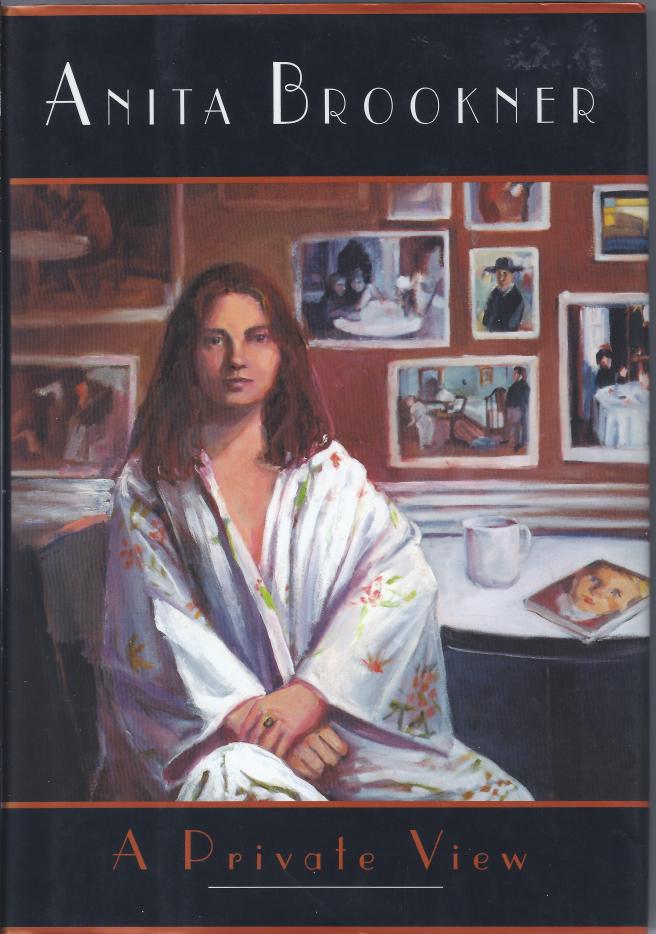
George Bland is 65 and newly retired. He  has lived his life cautiously, avoiding most emotional attachments. He has conscientiously but unambitiously worked his way over the  decades into the comfort of the middle class. There is little indication that George is disappointed by his rather, um, bland, existence, but much of it did seem predicated on a rather specific light at the end of the tunnel. He and his friend/co-worker Michael Putnam have long planned to spend their retirement travelling extensively through the Far East making up for years of delayed gratification. When Putnam unexpectedly dies George finds himself alone, unmoored, and incapable of enjoying a trip to France let alone the Far East.

George’s appetite for travel and adventure all but disappear with Putnam’s death. The most important relationship in his life has suddenly ended and he finds himself with nothing to fall back on. Aside from a network of friendly acquaintances, George’s only emotional connection is to Louise, a woman he dated so cautiously many years previously that she ended up marrying someone else and starting a family. Over the years, and Louise’s widowhood, they have remained in touch and her weekly telephone calls and occasional visit are the only real human contact George has left. But even this rather overstates the case. He expects her calls and wouldn’t think of missing them, but one gets the sense that they are merely a weekly milestone for Bland rather than something that maintains a real connection.

Into all of this steps Katy Gibbs, a youngish woman who convinces George to hand over the spare keys for his neighbor’s flat across the hall. She claims to be a friend and have permission to stay in their temporarily empty flat. It doesn’t take long for George to realize she  is squatting and probably doesn’t have permission to be there, but by that time he is both too embarrassed and too enthralled to move her. He finds  her off-putting and unlikable but finds himself uncontrollably drawn to her. Although he thinks about sexual conquest, this seems to be more of an impediment to fulfilling his interest in her rather than the point of it. George’s deep funk seems to be a swirl of grief over his good friend Michael and the sudden awareness of a lifetime of missed opportunities.

Though it was only just past five-thirty he went back to the bedroom and lay down again on his bed. He knew that a lonely night of reflection awaited him, and he welcomed it.

Whether George and Michael were lovers–I will take Brookner’s text at its word–is beside the point. George seems to never have rebelled a day in his life. Never pursued any sort of exceptional, or even noticeable status in any endeavor. He deliberately declined starting a family, and never seems to have had a mid-life crisis. He took small pleasures and kept his nose to the grindstone assuming that at the  end of it all there would be some pay off in retirement. With those plans snatched away by Michael’s death, George ends up focusing his attention on Katy. Although he seems willing to throw away much for her, one gets the feeling that it really has nothing to do with her.

It is perhaps when the inevitable break with Katy finally comes that the reader is given the sense that there might still be light at the end of the tunnel for George. A happy ending? Possibly.

Guest Review: Look at Me

[The following review was originally posted by Jacqui at JacquiWine’s Journal.]

Perceptive, engrossing and enigmatic, Look at Me – Anita Brookner’s third novel – is something of a minor masterpiece, probing as it does the inner life of a lonely young woman who experiences a brief period of renaissance, only to be scarred by the torrid experience.

The woman in question is Frances Hinton, a spinster who works in the reference library of a medical research institute, organising and cataloguing images of various mental conditions and abnormalities of human behaviour. Highly analytical and orderly by nature, Frances is a keen observer of her colleagues and visitors to the institute, studying and recording her observations as potential material for short stories, or possibly even a novel. In her spare time, of which there is ample, Frances aspires to be a writer, viewing her writing as a means of expression, of reminding other people that she exists. In short, it is her one way of saying: ‘Look at me. Look at me’.

After work, Frances returns to the large, outmoded flat in Maida Vale she has inherited from her recently-deceased mother. There she is looked after by the family’s elderly maid, a steadfast yet loyal Irish woman by the name of Nancy, who ministers to Frances as if she were still a child, serving her the same bland meal each evening out of habit and routine.

There are times, especially at night, when Frances wonders if this is to be her lot, with Nancy shuffling along the corridor in her worn slippers, carrying the same old-fashioned tray with the same meagre dinner ad infinitum; for while she is used to her own company, Frances longs for a little enjoyment and excitement in her life.

Sometimes I wish it were different. I wish I were beautiful and lazy and spoiled and not to be trusted. I wish, in short, that I had it easier. Sometimes I find myself lying awake in bed, after one of these silent evenings, wondering if this is to be my lot, if this solitude is to last for the rest of my days. Such thoughts sweep me to the edge of panic. For I want more, and I even think I deserve it. I have something to offer.

Then, just when she is least expecting it, Frances finds herself being drawn into the seductive world of Dr Nick Fraser, a charming yet shallow researcher at the institute, and Alix, his alluring, self-confident wife. In many ways, Nick and Alix appear to be the golden couple – glamorous, bohemian and flamboyant. Almost like the product of some form of natural selection, they attract various devotees and followers, drawing in admirers wherever they go. Naturally, Frances is intrigued by the Frasers’ sophisticated lifestyle, their spontaneity and ease with one another, and she clings to their company in the hope that some of the glamour and vitality will rub off.

Nevertheless, while Frances is fascinated by Nick and Alix, she also recognises that there is something a little repellent about them – more specifically, their need to show off or exhibit their relationship, as if she is there to serve as an audience for their performance, not as a friend or companion.

What interested me far more, although I also found it repellent, was their intimacy as a married couple. I sensed that it was in this respect that they found my company necessary: they exhibited their marriage to me, while sharing it only with each other. […] I was there because some element in that perfect marriage was deficient, because ritual demonstrations were needed to maintain a level of arousal which they were too complacent, perhaps too spoilt, even too lazy, to supply for themselves, out of their own imagination. I was the beggar at their feast, reassuring them by my very presence that they were richer than I was. Or indeed could ever hope to be. 

Alix, in particular, is rather careless and unfeeling, treating Frances as a kind of toy or plaything for her personal amusement, tossing her aside whenever she is bored. And yet, Frances puts up with Alix’s supposedly good-natured taunts, submitting to being referred to as ‘Little Orphan Fanny’ even though she claims to dislike the use of this pet name.

As her association with the Frasers continues, Frances also becomes involved with James Anstey, another researcher at the institute, who on the surface seems reliable and considerate. As a consequence, they begin to see one another, albeit in a fairly chaste and innocent fashion. Nevertheless, it’s not long before Frances starts to imagine a different kind of future for herself, far away from that of her predecessor at work, the bitter Miss Morpeth, who now faces a relatively bleak retirement; or that of Mrs Halloran, a regular visitor to the library who ekes out her days with the help of substantial quantities of drink.

Beginnings are so beautiful. I was not in love with James, but now there was something to get up for in the mornings, other than that withering little routine that would eventually transform me into a version of Miss Morpeth, although I had no niece in Australia who might brighten my last years. Nor would I turn into Mrs Halloran, still game, but doomed to hopelessness. No glasses of gin for me, no bottle in the wardrobe of a room in a hotel in South Kensington, no evenings lying on the bed dressed in a housecoat too young and too pink, casting superior horoscopes for those who fear the future. With what thankfulness did I register my deliverance from this dread, which had possessed me for as long as I could remember.

Naturally, as this an Anita Brookner novel, the aura of happiness that surrounds Frances is somewhat short-lived. All too soon, Alix is berating Frances, accusing her of stringing Nick along and selfishly taking advantage of him – this seems a bit rich coming from Alix, who has to be one of the most heartless, self-absorbed characters you are ever likely to encounter.

I felt that I was being hurried along a path that I had not originally wanted to take, or at least not with so much dispatch, so much secrecy. I had wanted the company of my friends to sustain my golden enjoyment and my new future, but those friends had turned into spectators, demanding their money’s worth, urging their right to be entertained. And I no longer wanted to be available for that particular function.

It all ends rather badly, of course, with a shattering dinner at the restaurant frequented by Alix and Nick. Before the night is out, Frances is subjected to another haunting experience as she combs the streets of London in a state of shock, fear and disorientation.

Look at Me is a very accomplished novel. What impresses me most about it is how cleverly Brookner controls the narrative. There is something incredibly compelling about Frances’ voice, the carefully-constructed reflections and insights into her complex personality. Few writers can capture the acute pain of social isolation and dashed dreams quite like Anita Brookner, and this has to be one of her best, most nuanced explorations of these themes.

While Frances isn’t a classic unreliable narrator as such, there is something slippery and elusive about her story. She frequently contradicts herself or claims to desire things that are pulling in opposite directions. For example, Frances is fatally drawn to the Frasers and their alluring lifestyle; and yet in her heart of hearts, she knows there is something repulsive about them, something unsavoury and possibly dangerous. Moreover, she declares a lack of love for James, and yet she also persists in dreaming of some kind of life with him. There are instances when Frances seems at once both childlike and old before her time – and for someone so analytical in nature she lacks self-awareness, failing to recognise how others perceive her. There are also some oblique references to a previous relationship in her life, a painful, damaging affair, almost certainly with a married man.

As the novel draws to a close, there is a sense that Frances realises she was out of her depth with the Frasers, destined for a brief flirtation with their gilded lives without every truly taking part. Her only consolation is that she now has ample material for her novel, the various characters and scenarios seem fully formed.

I have quoted very extensively from this novel, partly because of the flawless nature of Brookner’s prose – not a word wasted or out of place. I’ll finish with one last passage from the final section, Frances forever the outsider, always looking in.

I could not even side against them. I was not of their number, that was all. The moment at which I recognized this difference was the ultimate sadness, and I felt all my assumed certainties dropping away from me as if they had been fashionable clothes which I had perhaps tried on in a shop and then regretfully laid aside, as being…not suitable.

Review: Dolly / A Family Romance

[Number 13 in my chronological re-read of Brookner’s 24 novels.]

As I work my way through a chronological re-read of all 24 of Anita Brookner’s novels, it becomes harder and harder for me to write what passes for a “review” on this blog. I’ve never been very good at bringing any real light to the books I read, but when the  writing in a novel is so taut and precise and perfect, it just makes anything that comes out of my mouth seem like garbage. For as much as I love Brookner’s work I’ve not really read anything about her writing process. She was a bit reclusive so perhaps she never really shared that information, but I have to wonder, was Brookner like Mozart whose work allegedly came out of his head fully formed, or are her manuscripts illegible because of all the strike-throughs as she hunted for the most elegant version of perfection?

In the United States, Anita Brookner’s 13th novel is called Dolly. In the UK, and perhaps everywhere else, it is called A Family Romance. For those who know Brookner’s work, you could not be faulted for thinking that there was no way that she wrote a hearts and roses kind of romance. And you’d be right. This tale sits squarely on the less used, secondary definition of ‘romance’ that is synonymous with “wild exaggeration” and “picturesque falsehood”.

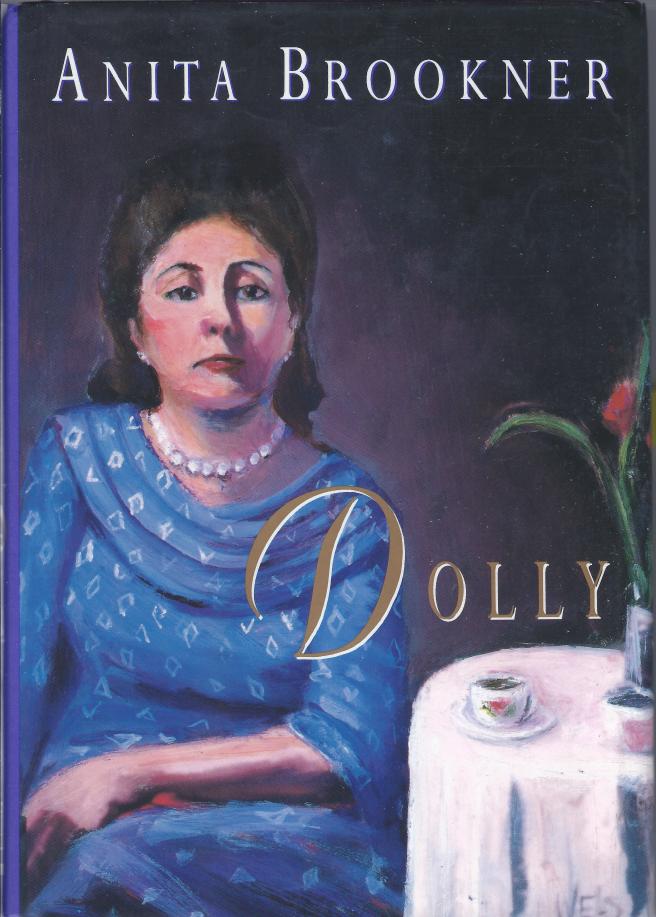
I first thought that the U.S. title Dolly was far more descriptive given that the character Dolly is like a force of nature blowing her way across every page with hurricane force. But really, this book is about Jane Manning, the niece of Dolly’s late husband Hugo. Dolly would hate that I would take the spotlight away from her, and Jane would be appalled that anyone might think she was drawing attention to herself. But for all that Dolly dominates the book and Jane’s life, the fact that we see all of this through Jane’s eyes and we understand the impact Dolly is having on Jane one begins to realize that this has much more to do with Jane than Dolly. This seems particularly true somewhere along the way when Jane’s role of narrator takes on an omniscience that seems, upon reflection, to be much more about what Jane imagines than what we know for a fact Dolly actually does. One could suppose that Brookner got sloppy and couldn’t figure out how to convey the  action without making Jane omniscient. But I don’t think Brookner was capable of sloppy.

In terms of plot and setting, all of the Brookner hallmarks are there. A young woman of modestly independent needs (and that’s all relative, as Brookner even admits in the text) spends her time being lonely and wanting to be alone and at the same time. There is a francophone element, lots of walking through London, and lots of suppressed emotion. More specifically, Jane finds herself orphaned at 18 with only an aunt by marriage (Dolly) to call family. As the holder of inherited wealth she has also inherited the self-imposed responsibility to see that Dolly is financially secure.

And then there is Dolly. Raised by a single hard-working, but poor mother, Dolly never gets over being poor and she never gets over not belonging. Although Dolly finds security in Jane’s uncle Hugo (before Jane was born) his untimely death leaves her untethered and without an audience and status. Her need for financial assistance first from Hugo’s mother, then Hugo’s sister (Jane’s mother), and finally from Jane, has more to do with Dolly’s need to buy friends (and attention) then it has to do with economic security. With catch phrases like “Charm, Jane, charm!”, I had a hard time not hearing the voice of Penny from the British TV show “As Time Goes By”.

In the final chapter Jane is in America on a lecture circuit of women’s colleges where she has trouble connecting with the young female students whose every discussion focuses on gender. At first I had a hard time understanding the point of all of this other than an opportunity for Brookner to go after political correctness–which she does in a characterization of progressive male partners/husbands that could have been background for a character on Portlandia–but a closer read indicates that there is more to it than that. Just like Dolly’s abhorrence over Jane’s unmarried state, most of these young feminists have husbands, and despite their feminism, seem to have a hard time relating to her because she was unmarried. Jane has a hard time convincing them that she is “any kind of woman”.

It is not that they would necessarily want me to find love and marriage, in the sense of a happy ending. But if I were sharing household chores with some cheerful fellow in jeans and a shirt ironed by himself they could understand me better. How then to disappoint them by telling them that I prefer the fairy-tale version, and will prefer it until I die, even though I may be destined to die alone?

No doubt Jane would have an even harder time explaining that notion to Dolly whose quest for the fairy-tale version has resulted in less than fairy-tale circumstances over the years–and an old age that still has her dying alone.

Review: Fraud

[Number 12 in my chronological re-read of Brookner’s 24 novels.]

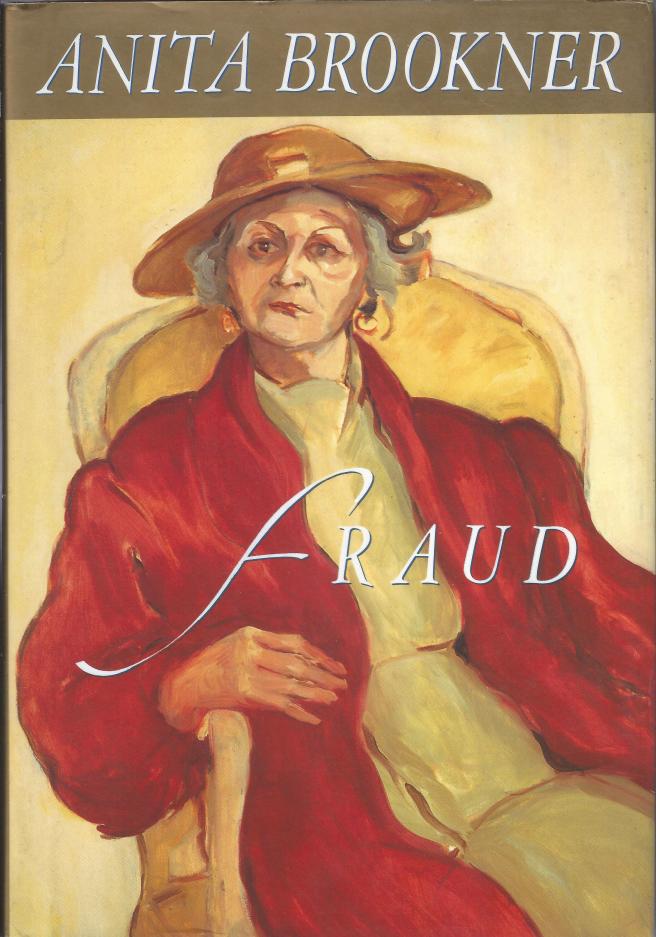
Anna Durrant is a “woman in her middle years” who has gone missing, but it has taken four months for anyone to notice. Her physician, Dr. Lawrence Halliday, notified the police after she had missed several appointments. As the police begin to investigate we are introduced to the handful of people who are closest to Anna and in turn discover that none of them are really very close to her. There is her char woman Mrs. Duncan, her late mother’s frenemy Mrs. Marsh, and Dr. Halliday–the man her mother expected her to marry.

As the investigation continues the story of Anna and her relationships with her social circle is explained. Mrs. Duncan really only sees her as a paycheck. Mrs. Marsh resents Anna’s attentiveness, almost taking umbrage at her willingness to run errands, walk her to church, and take care of her while she is ill. Despite Mrs. Marsh’s old age and relative isolation she seems to feel that Anna is the one to pity. It’s as if Mrs. Marsh feels that associating with Anna–who had never been married or led any kind of interesting life–might reflect poorly on her own image. I have always obsessed about getting old and and being alone. Now that I am 48 I am beginning to wonder if even the best laid plans can go belly up and one can still end up alone in old age. Which is why I wonder why Mrs. Marsh doesn’t lighten up and appreciate Anna. But then I think about how sensitive I am to people that don’t suit me perfectly and how little patience I have for them, and I can only imagine what kind of miserable bastard I am going to be in 30 years. I found this scene with Mrs. Marsh particularly sad and beautiful.

Failing God, one turned to Nature. If only the year would turn, she thought longingly, as she plodded down the stairs to her own flat. If only I could smell grass and feel heat and see the sun! For now she craved only light and thought that if she lived until summer she would stare at the sun, taking its radiance into her very substance, letting her eyes burn until they were sightless. She would not mind dying, if it could be in the summer.

Dr. Halliday’s relationship with Anna is slightly more complicated and intimate. Not only is he Anna’s and her late mother’s doctor, but also the man her mother assumed she would marry. It seems Anna and Dr. Halliday also assumed at different times the same thing. But Lawrence succumbs to the physical charms of Vickie Gibson, a slightly younger woman of a particularly superficial bent. Knowing how much the news will distress her ailing mother, both Anna and Lawrence keep the news of his marriage to Vickie a secret and Mrs. Durrant goes to her grave thinking that Anna and Lawrence will be married. Although never spoken of, it eventually becomes clear to both Anna and Lawrence that they both would have been happier if they had married. Lawrence quickly tires of vapid Vickie and doesn’t quite know what to do about it other than go on two-hour runs each night after work. This indeed, might be the earliest clear indication of the fraud in Fraud. First the charade of Anna and Lawrence pretending to Mrs. Durrant and then fraud of Lawrence’s marriage itself.

A fraud Anna perpetrates on herself is what she has done, and what she means to do to fill her life. Not needing a job, Anna is adrift except for her “research”. When her mother is gone, Mrs. Marsh is distant, and Lawrence occupied with Vickie, Anna doesn’t know what to do with herself.

There was always her work of course, that not altogether invalid project to write a series of articles, or even, if she were capable of it, something more substantial, on the great salons of Paris during the Second Empire. The research had given her some agreeable moments, but she could not quite hide from herself the knowledge that until now the work had been more alibi than pastime, enabling her to escape…

The big fraud of the book is eventually identified and articulated by Anna herself. In the end we find her in Paris seemingly having figured out what to do with herself. It is kind of a deliciously odd ending because up until the final pages of the book it seems like we may never hear from Anna again with the action focused on Mrs. Marsh and her daughter Philippa. But then Anna bumps into Philippa in a café and is surprised to learn from her that her absence in London has been noted. Anna expresses surprise at Phillipa’s assertion that Mrs. Marsh was very fond of her. Anna, tapped into some new source of self awareness and confidence, expresses her doubts about Mrs. Marsh’s feelings about her and explains to Philippa that she has spent her life being what others wanted her to be. The scales pulled from her eyes, Anna is no longer willing to continue the fraud that others have perpetuated on her through their expectations of her.

“I’ve grown up at last. Do you know how long it takes some of us? And now I’m free. Free of the old self. Free of expectations.”

“Free of hope?”

“Oh, no, never free of hope. Hope is an old habit, not easily dislodged. No, free of expectations. I reserve my hope for a good outcome, a good cause. That is important, I think. A good cause.”

Review: A Closed Eye

[Number 11 in my chronological re-read of Brookner’s 24 novels.]

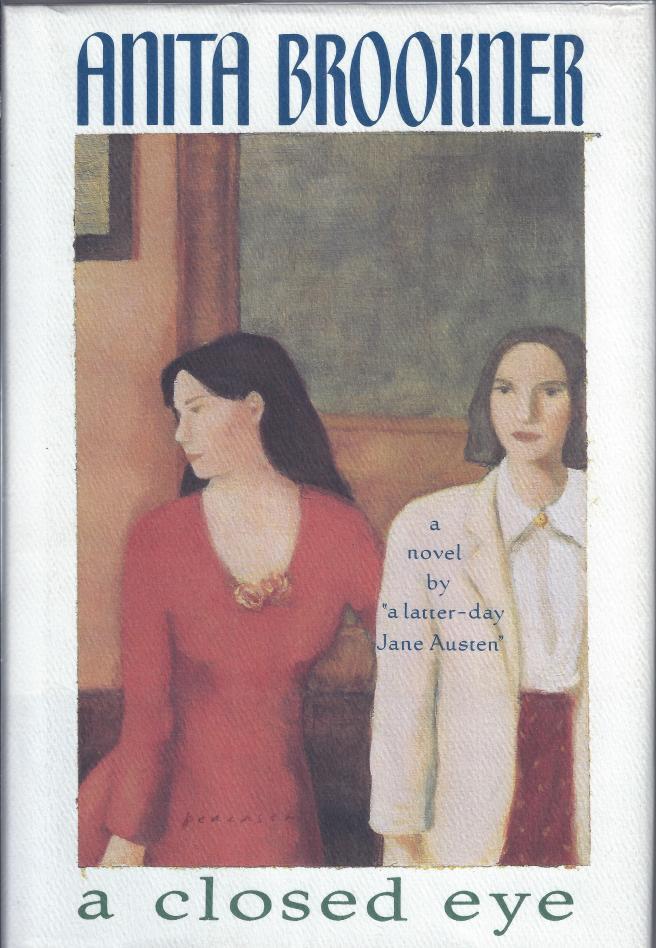
Harriet Lytton, a recent widow in self-imposed exile in Switzerland, exhorts Lizzie Peckham, the daughter of her childhood friend, and ersatz friend of her own daughter Immy, to visit her in Switzerland. Why Harriet chooses Lizzie to help her mitigate her lonely life in Switzerland, and how Harriet got to this lonely state in the first place, is laid out as the timeline goes back to before Harriet was born.

The daughter of a vivacious, rather driven mother and a father left nervous by his experiences in World War II, Harriet is born with a prominent birthmark on her face. The birthmark not only informs how Harriet feels about her self, her relationships, and her place in the world, but it’s also the motivation for Merle, Harriet’s mother, to gently, but firmly push her into a marriage with a much older man. Harriet finds herself married to a man she doesn’t really love and doesn’t even really like much, but the birth of her perfect, blemishless, daughter Imogen ends up being the focus of her life . As Immy grows older, more independent, and frankly, brattier, Harriet begins to escape the tedium of her marriage by thinking about the possibility of an affair with Jack Peckham. The husband of her childhood friend Tessa, Jack is a TV news correspondent who represents all the danger, and excitement, and passion missing from Harriet’s life.

In the meantime, the relationship between Harriet’s Immy and Tessa’s daughter Lizzie is never what Harriet thought it should be, but Harriet never figures this out. She is blind to how much the two girls dislike each other. Having been raised as the perfect child–the one who redeems Harriet’s life, Immy ends up acting like someone who was treated as perfect. She becomes insufferable and spoiled. Lizzie on the other hand becomes bookish and quiet and old beyond her years. In a way Harriet and Tessa ended up with the wrong children and all may have benefited from a parent swap. Interestingly, re-reading Brookner’s novels chronologically as I am, this is not the first time we see this notion of children born to the wrong parents in her work. The two sets of parents in Latecomers also each have have an only child who appears to be better suited to the other couple. It makes me wonder if Brookner felt she had been born into the wrong family.

And then, rather oddly for Brookner, there are a few spoilers. Without giving these spoilers away, one event that shapes the story fairly early on, and thus, isn’t so much of a spoiler, is that Tessa dies young leaving Lizzie adrift and Jack, the subject of Harriet’s seduction fantasies. But then the spoiler of spoilers happens that cements Harriet’s future. Don’t get me wrong, for those of you used to plot, this spoiler won’t shock you much when you come across it, but for those who have read a lot of Brookner, it’s pretty surprising.

The net result is a life of low expectations that are nevertheless unmet. To paraphrase Gertrude Stein, those of you who don’t mind that won’t mind that.

The jacket flap from my U.S. edition referred to the novel as a story of three generations of women, but I really think it is more accurately thought of as Harriet’s story. Her mother Merle is fairly well fleshed out, but Immy remains pretty opaque even when we know is going on in her life. And all that we do learn about Merle and Immy is not really independent of their association with their daughter/mother. Brookner created a literary work that revolves around Harriet but Harriet’s “real” life most certainly does not revolve around her.

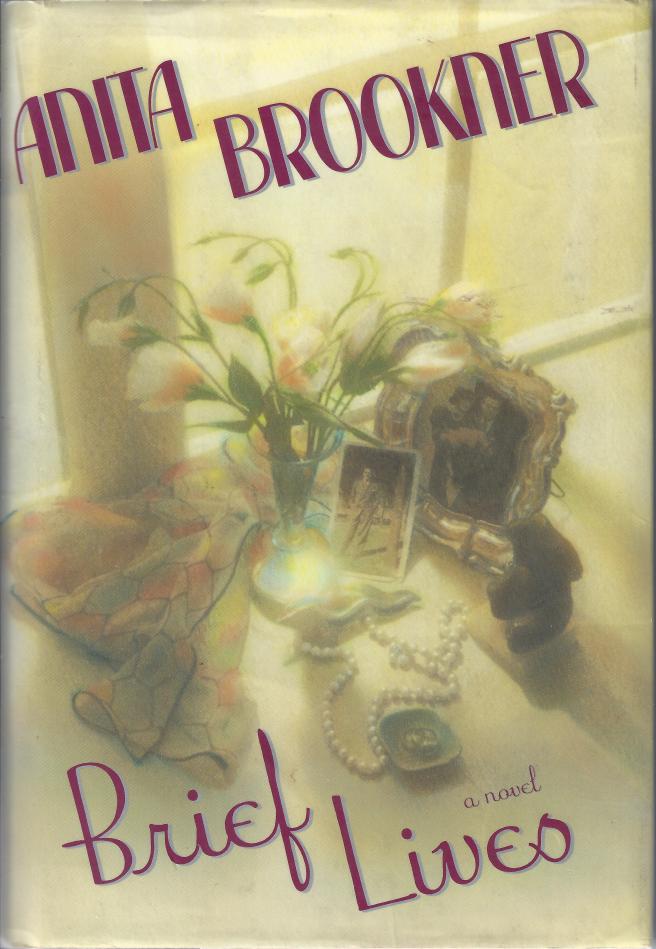
Review: Brief Lives

[Number 10 in my chronological re-read of Brookner’s 24 novels.]

In the past I’ve accused myself of reducing Brookner’s novels to just being about lonely, depressed people waiting to die. Re-reading the first nine of her novels has given me abundant proof that there is much more going on than that.

And then in Brief Lives, there’s this:

Certain evenings I sat in the sitting-room without bothering to put on the lights, looking out at that street lamp.

That would by Fay. A woman in her early 60s, once a regular singer on the BBC, widowed, alone, and thinking that there really isn’t much left for her but watching the timer on life run out. These are the Brookner characteristics I most remember from reading her 24 novels the first time. I alternate between taking comfort in this kind of character and deeply fearing her. Or more accurately, I fear becoming her.

Fay doesn’t have much in the way of a social life. There’s Millie her old flatmate and singing colleague at the BBC, but she lives in the country now and Fay doesn’t see her much. Her husband’s cousin and his wife occasionally invite her to dinner where she meets a man. But he is emotionally unavailable and keeps her as much at arm’s length as he does seem to enjoy spending time with her. That is until she has a human emotion, at which point he fades quickly from her life.

For the most part though, Fay’s life is consumed by Julia, a former actress whose husband Charlie was a business associate of her husband Owen. Julia is like a low-rent Norma Desmond character minus the glamour.

She lived on omelettes and whisky, maintaining that she liked neither, and appeared none the worse for it.

Julia surrounds herself with women who are devoted to her. I would call them sycophants, but that is too uncharitable. There’s Pearl, her former dresser, and Maureen, a small town newspaper columnist who interviews her and ends up becoming a regular fixture in Julia’s life. Both are essentially care givers and companions and never considered by Julia to be equals or even friends.

Fay’s relationship with Julia is also unequal and it’s complicated. With no real ties to Julia, Fay still feels compelled to ensure that the ungrateful Julia is okay which often means enduring Julia’s deprecating, mean-spirited banter. Fay finds it impossible to break free from Julia and allows her to get under her skin. Julia manages to somehow poison whatever drive and determination Fay has for her own future happiness.

Even after Julia is out of her life, Fay is unable to see anything in her future but death. For those of us who look forward to retirement sometime in our 60s, Fay’s outlook is a puzzle. I don’t think it was Brookner’s intention to depict someone who is clinically depressed, but it is hard to understand Fay’s outlook. As she contemplates her life after the death of her husband–who she didn’t really like–she sells their home contemplates moving into a new flat.

I could see myself in Drayton Gardens, going out with my basket on wheels, tempting my own appetite, keeping up appearances, and doing no harm, not even to myself. Lonely? Yes, I should be lonely, but in time I should see that this was to my advantage. I should be training myself for old age, which takes a certain amount of training; better to start as I meant to go on.

I used to worry about being this person before I met my husband. I was 33 and had come to terms with being mate-less for the balance of my life. Now, 14 years later, with a very happy married life, but no kids, I find myself thinking about a future, albeit a somewhat distant one, where the only people in my life are the ones I pay to take care of me. This horrifies me to my core. I’ve got 30 years to make some friends who aren’t long distance. Although by Fay’s standards I only have about 15 years to make some meaningful connections. Yikes.

As with all of Brookner’s novels the prose is brilliant and precise. Unless you are looking for a big downer, I wouldn’t recommend this for your first Brookner experience (try Lewis Percy). But if you do like a bit of a wallow, Brief Lives will not disappoint.