
[Number 23 in my chronological re-read of all of Anita Brookner’s 24 novels.]
After reading a few contemporary reviews of Leaving Home, one gets the feeling that reviewers, if they hadn’t previously, had gone cold on Brookner’s 23rd iteration of the same story. Of course this is a simplistic view of both the reviewer’s points of view and Brookner’s work itself, but I have myself often referred to the sameness of these novels. The key difference between me and the reviewers, however, is that I haven’t tired of Brookner’s formula. With only one more novel in my re-read, I have read 47 Brookner novels and after I finish the 24th for the second time, I know I will be back in the future to read most, if not all, of them again.
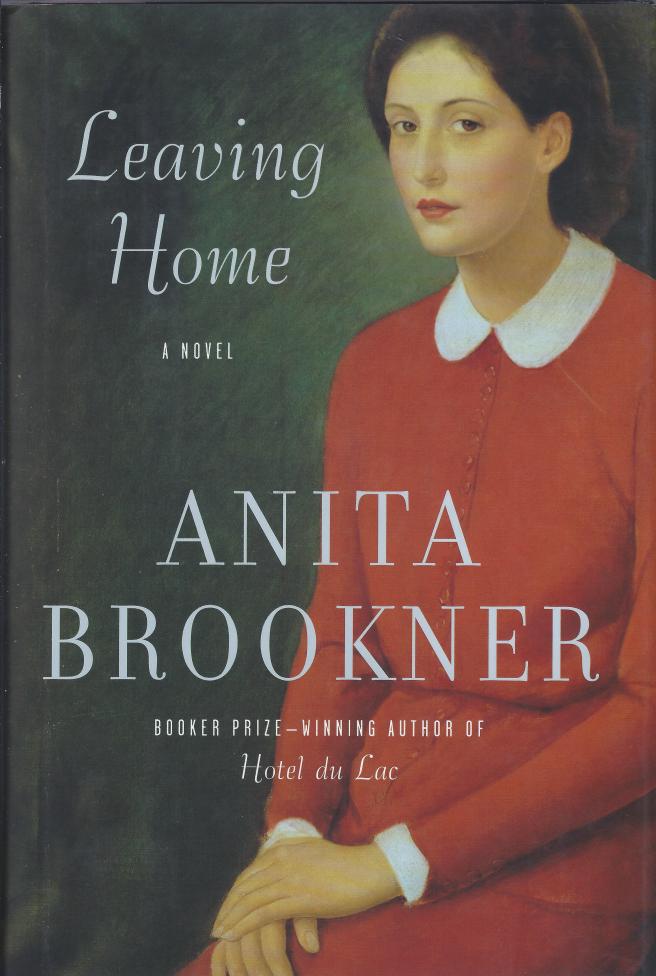
In Leaving Home, Emma Roberts, although still young, looks back on her life and her various life choices in a way that suggests she feels powerless to alter her trajectory. One gets the feeling that her leaving home to pursue post-graduate studies on classical garden design in Paris, and all of her experiences there, don’t seem to her, in retrospect, as amounting to much. It’s not enough that she did these things, she describes them in a way that implies she was powerless throughout. She seems to fall into everything that happens to her, from her research, to her relationships with Michael, Philip, and her only French friend, Françoise. Even her decisive action when she is forced into a rather horrific situation with Françoise’s maman in a decaying house in the French countryside seems inconsequential enough to alter the trajectory of her life.
I am now the age (52) Brookner was when she published her first novel. I have often felt myself a bit of a Brookner character. There was even a point at age 33, and just weeks before meeting the man who would become my husband, that I told a friend I had made peace with the fact that was going to be alone forever and was okay becoming a Brookner character. In many ways this too is overly simplistic. I could never be as passive as one of Brookner’s heroines, but I could relish a solitary life to the point where loneliness and the indignities of the forever-single would make my splendid isolation more tragic than comforting. Although some of Brookner’s characters have led lives of agency off the pages, either before or during the action of the novel, it is never described explicitly enough to convince us that it amounted to much.
After about 25 years of reading Brookner, and sliding into an age bracket where one turns into something without fully realizing it, there are still parts of me that find the lives of her characters desirable. I used to think I would keep young people in my life in a way that would keep me engaged in the world, but the more I deal with Millennials and younger, the less I want to deal with anyone younger than myself. I’m not singling out those cohorts, I’ve just come to understand why old people often aren’t as interested in the young as the young think they should be. This isn’t, of course, the point of Leaving Home, but it is what’s on my mind as I contemplate Brookner’s distinctive world.
For as long as I have worried about becoming a Brookner character, I have also taken an inordinate pride in the fact that I have left home, literally and metaphorically, many times in my life. Leaving for college, leaving to work abroad, moving across the country for a boyfriend, moving to Hawaii sight unseen, moving back to Minnesota (my home state) and leaving a good job after three years to get a second master’s degree in upstate New York, and moving yet again to land here in DC. I still rattle this off wanting to give you even more detail–my leaving places is part of my identity. But after 20 years in one spot and being happy to stay for another 20, my need for you to know of my past is no greater evidence of the fact that I fear becoming a Brookner creation more than welcome it.
In the end, I may have no more choice than Emma in Leaving Home. It’s not that she hasn’t lived, it’s that none of her choices keep her from a fate that seems pre-ordained from the outset. Since Emma describes her life in retrospect, it’s impossible to know if she knew where her choices (or lack thereof) were leading her, but maybe that is the point. We can leave home as many times as we want, it’s not going to keep us from becoming what we become.

 Brookner Place